Disclaimer: This content is for educational purposes only, not medical advice. Always consult with a doctor before making significant changes to your diet, especially if you have pre-existing health conditions.
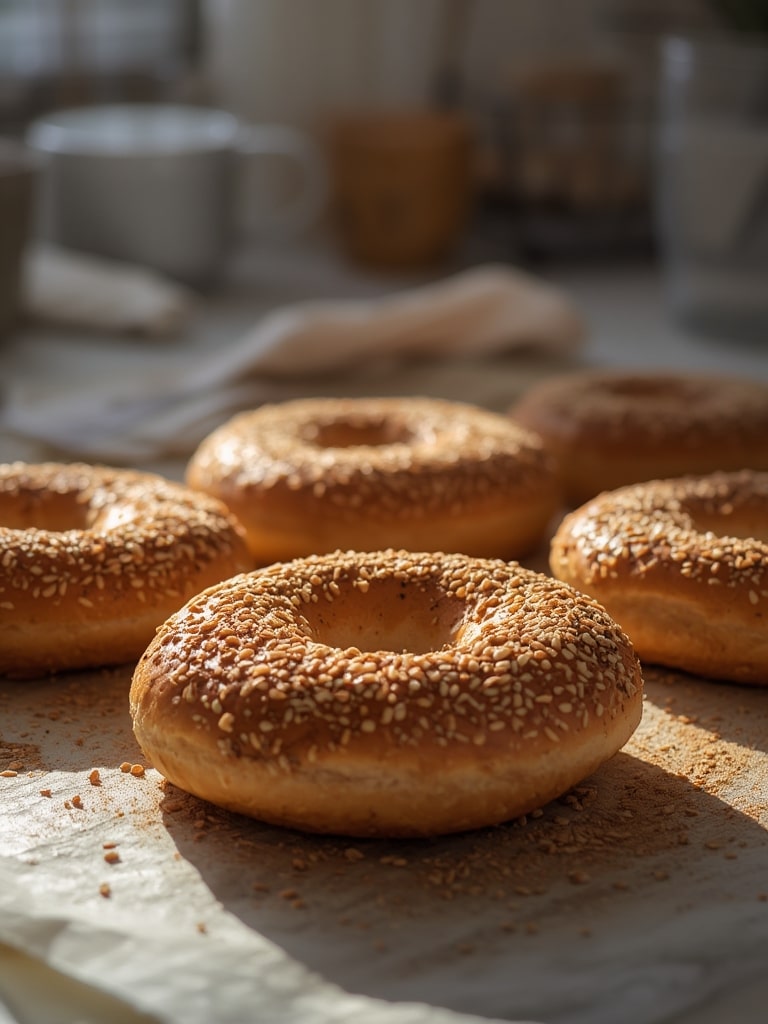
Gluten free bagels became one of my favorite weekend projects after I missed the chewy bagels I grew up loving at small Asheville bakeries. In my North Carolina kitchen, I tested this recipe until it felt simple, reliable, and beginner-friendly.
Before we jump in, here’s what we’ll cover. You’ll learn which gluten-free flours work best, how to shape bagels without stress, how to boil and bake them for that classic chewy bite, and how to store them for busy mornings.
Table of Contents
Key Takeaways: What You Need To Know
– Gluten free bagels need structure from gluten-free flour blend, psyllium husk, and yeast.
– Boiling before baking creates the chewy crust you expect from traditional bagels.
– Warm water, not hot water, helps yeast activate properly.
– Toppings like sesame seeds, poppy seeds, and everything seasoning add bakery-style flavor.
– No stand mixer is required, so this recipe works well for beginner home cooks.
Why Are Gluten Free Bagels Worth Making at Home?
Gluten free bagels taste fresher, softer, and more satisfying when you make them at home. You control the flour blend, texture, toppings, and sweetness. Plus, this method uses simple tools, yeast dough, warm water, and an oven for an approachable bakery-style result.
What makes these gluten free bagels special?
Gluten free bagels often taste dry or crumbly from the store. However, this recipe stays chewy because it uses psyllium husk, instant yeast, and a balanced gluten-free flour blend.
I’m Lucy, the home cook behind urdailyrecipes. I’m 38, and I grew up in Asheville, North Carolina, where mountain mornings often meant warm bread, strong coffee, and family gathered around a small kitchen table. So, when I started creating recipes for newer cooks, I knew I wanted this one to feel comforting, not complicated.
My kitchen motto is simple: Simplicity first, creativity always. Because of that, these gluten free bagels don’t require fancy equipment. You just need a bowl, spoon, saucepan, baking sheet, and your hands.
Why should beginners try homemade bagels?
Gluten free bagels give beginner cooks a confidence boost because the steps feel clear and forgiving. First, you mix the dough. Then, you shape it. Finally, you boil and bake it.
Even better, this recipe teaches useful baking skills. You’ll learn how yeast smells when it activates, how sticky gluten-free dough should feel, and why boiling creates a chewy crust. As a result, you’ll build real kitchen confidence while making something delicious.
What Ingredients Do You Need for Gluten Free Bagels?
Gluten free bagels need a sturdy flour blend, yeast, warm water, salt, sweetener, and psyllium husk for chew. These ingredients work together to mimic traditional bagel dough while keeping the recipe wheat-free, balanced, and easy for home kitchens.
Which gluten-free flour blend works best?
Gluten free bagels need a 1:1 gluten-free flour blend that contains rice flour, potato starch, tapioca starch, and xanthan gum. These ingredients create structure and help the dough hold its shape.
If your blend doesn’t include xanthan gum, add 1 teaspoon xanthan gum. However, don’t add extra if your blend already has it. Too much gum can make the bagels gummy instead of chewy.
| Ingredient | Amount |
|---|---|
| Gluten-free 1:1 flour blend | 3 cups |
| Psyllium husk powder | 1 tablespoon |
| Instant yeast | 2 1/4 teaspoons |
| Warm water | 1 1/4 cups |
| Honey or maple syrup | 2 tablespoons |
| Fine salt | 1 teaspoon |
What toppings taste best on gluten free bagels?
Gluten free bagels taste amazing with classic toppings like everything bagel seasoning, sesame seeds, poppy seeds, dried onion, or coarse salt. Also, you can keep them plain for cream cheese or breakfast sandwiches.
Try these easy toppings:
– Everything seasoning: bold, salty, and classic
– Sesame seeds: nutty and simple
– Poppy seeds: bakery-style and crisp
– Cinnamon sugar: sweet and kid-friendly
– Cheddar flakes: savory and cozy
How Do You Make Gluten Free Bagels Step by Step?
Gluten Free Bagels
Equipment
- Large mixing bowl
- Wooden spoon
- small mixing bowl
- Large pot For boiling bagels
- Baking Sheet
- Parchment paper
- Pastry Brush Optional for egg wash
Ingredients
- 3 cups gluten-free 1:1 flour blend
- 1 tbsp psyllium husk powder
- 2 1/4 tsp instant yeast
- 1 1/4 cups warm water
- 2 tbsp honey or maple syrup
- 1 tsp fine salt
- 1 tbsp honey for boiling water
- 1 egg for egg wash (optional)
- 2 tbsp everything bagel seasoning or sesame seeds (optional topping)
Instructions
- In a small bowl, combine the warm water, honey or maple syrup, and instant yeast. Let the mixture sit for 5 minutes until lightly foamy.
- In a large mixing bowl, stir together the gluten-free flour blend, psyllium husk powder, and fine salt.
- Pour the yeast mixture into the dry ingredients and mix with a wooden spoon until a thick sticky dough forms.
- Let the dough rest for 10 minutes so the gluten-free flour and psyllium husk fully hydrate.
- Divide the dough into 6 equal pieces. With damp hands, roll each piece into a ball and poke a hole through the center to shape the bagels.
- Gently stretch each hole to about 1 1/2 inches wide and place the shaped bagels on a parchment-lined baking sheet.
- Preheat the oven to 425°F and bring a large pot of water to a gentle simmer. Add 1 tablespoon honey to the water.
- Boil each bagel for 30 seconds per side, then transfer them back to the baking sheet.
- Brush the tops with egg wash if desired and sprinkle with everything seasoning, sesame seeds, or other toppings.
- Bake for 22 to 25 minutes until the bagels are golden brown, firm, and slightly crisp on the outside.
- Cool the bagels for at least 15 minutes before slicing and serving.
Notes
Nutrition
Gluten free bagels come together through mixing, resting, shaping, boiling, and baking. The process looks advanced, but each step stays simple. Use active yeast, a hydrated dough, gentle shaping, and a hot oven for chewy homemade bagels.
How do you mix gluten free bagel dough?
Gluten free bagels start with hydrated dough, so combine warm water, honey, and yeast first. Let the mixture sit for 5 minutes until it looks lightly foamy.
Next, stir together gluten-free flour, psyllium husk, and salt in a large bowl. Then, pour in the yeast mixture. Mix with a wooden spoon until the dough turns thick and sticky. Because gluten-free dough absorbs moisture slowly, let it rest for 10 minutes before shaping.
| Step | What To Do |
|---|---|
| Mix | Combine yeast, warm water, honey, flour, psyllium, and salt. |
| Rest | Let dough sit for 10 minutes so it firms up. |
| Shape | Form 6 bagels with damp hands. |
| Boil | Boil each bagel for 30 seconds per side. |
| Bake | Bake at 425°F for 22 to 25 minutes. |
How do you shape and boil them correctly?
Gluten free bagels shape best with damp hands because the dough feels sticky. Divide the dough into 6 equal pieces. Then, roll each piece into a ball and poke a hole through the center.
Gently stretch the hole to about 1 1/2 inches wide. Meanwhile, bring a large pot of water to a simmer. Add 1 tablespoon honey to the water for color. Then, boil each bagel for 30 seconds per side. After that, move them to a parchment-lined baking sheet.
How Do You Bake Gluten Free Bagels for Chewy Texture?
Gluten free bagels need high heat, a short boil, and enough baking time to develop a golden crust. Bake them at 425°F until firm, browned, and slightly crisp outside while staying soft and tender inside.
What oven temperature works best?
Gluten free bagels bake best at 425°F because the hot oven sets the crust quickly. Also, it helps the bagels rise before the outside gets too firm.
Brush the boiled bagels with egg wash if you want deeper color. For an egg-free option, use olive oil or milk. Then, sprinkle on your toppings before baking so they stick well.
Bake for 22 to 25 minutes. However, check them at 20 minutes if your oven runs hot. They should look golden, feel firm, and sound slightly hollow when tapped.
How do you know when they’re done?
Gluten free bagels finish baking when the crust turns golden brown and the centers no longer feel wet or heavy. If you use a thermometer, the inside should reach about 205°F.
Let them cool for at least 15 minutes before slicing. I know that part feels hard. However, gluten-free bread needs cooling time to set its crumb. If you slice too early, the inside may seem gummy even though the bagels baked correctly.
How Can You Serve and Store Gluten Free Bagels?
Gluten free bagels work for breakfast, brunch, lunch, and meal prep. Serve them toasted with cream cheese, butter, eggs, smoked salmon, avocado, or peanut butter. Store them carefully so they stay soft and fresh longer.
What are the best serving ideas?
Gluten free bagels taste best lightly toasted. The heat revives the crumb and gives the crust a crisp edge. For a classic breakfast, spread them with plain cream cheese and add tomato slices.
For a hearty option, make a breakfast sandwich with scrambled eggs, cheddar cheese, and turkey bacon. Also, you can add mashed avocado, lemon juice, and red pepper flakes for a fresh lunch.
My favorite Asheville-inspired version uses whipped cream cheese, a drizzle of honey, and toasted pecans. It reminds me of mountain brunches where simple ingredients always felt special.
How should you store leftovers?
Gluten free bagels stay fresh at room temperature for about 1 day. However, they dry out faster than wheat bagels, so freezing works best.
Use this storage plan:
– Room temperature: Store in an airtight bag for 1 day.
– Refrigerator: Avoid it if possible because it dries the crumb.
– Freezer: Slice first, then freeze for up to 2 months.
– To reheat: Toast from frozen until warm and crisp.
What Tips Help Gluten Free Bagels Turn Out Better?
Gluten free bagels turn out better when you hydrate the dough, use damp hands, avoid extra flour, and cool them before slicing. Small technique changes improve chew, rise, flavor, and structure, especially for beginner gluten-free baking.
What common mistakes should you avoid?
Gluten free bagels can turn dense if you add too much flour. Instead, let the dough rest and firm up naturally. Also, don’t skip the boil because it creates that signature bagel bite.
Avoid these common mistakes:
– Using hot water: It can kill the yeast.
– Skipping psyllium husk: It helps create chew and structure.
– Over-flouring the dough: It makes bagels dry.
– Slicing too soon: It can make the center gummy.
– Under-baking: It leaves the crumb wet.
What happened when I tested this recipe?
Gluten free bagels took me several rounds to get right. During my first test, I added too much flour because the dough looked sticky. Unfortunately, the bagels turned heavy and dry.
On the next batch, I trusted the rest time. Then, the dough became easier to handle. My neighbor, Dana, tried the final version after a chilly morning walk and said, “These taste like real bagels, but lighter. I’d never guess they’re gluten-free.”
That comment mattered to me because I build urdailyrecipes for home cooks who want real food without stress. So, I kept the method simple, tested the timing, and chose ingredients you can find in most US grocery stores.
Can You Customize Gluten Free Bagels for Different Diets?
Gluten free bagels adapt well to dairy-free, egg-free, savory, and sweet versions. You can change toppings, swap sweeteners, or adjust the finish while keeping the same base dough and baking method.
How do you make them dairy-free or egg-free?
Gluten free bagels are naturally dairy-free if your flour blend contains no milk powder. For egg-free bagels, skip the egg wash and brush the tops with olive oil, almond milk, or maple syrup water.
If you want vegan bagels, use maple syrup instead of honey. Also, check your toppings because some seasoning blends include dairy. Simple sesame seeds, poppy seeds, and coarse salt usually work well.
What flavor variations can you try?
Gluten free bagels welcome creative flavors. Add 1 teaspoon garlic powder for savory bagels, or mix in 1 tablespoon cinnamon and 2 tablespoons raisins for a sweet breakfast version.
Try these variations:
– Garlic herb: Add garlic powder and dried parsley.
– Cinnamon raisin: Add cinnamon and raisins before resting.
– Jalapeño cheddar: Fold in diced jalapeños and shredded cheddar.
– Blueberry: Add dried blueberries and a little lemon zest.
– Everything bagel: Finish with everything seasoning before baking.
Homemade gluten free bagels bring comfort, creativity, and real kitchen confidence to your table. Start simple, trust the process, and enjoy every warm, chewy bite.